
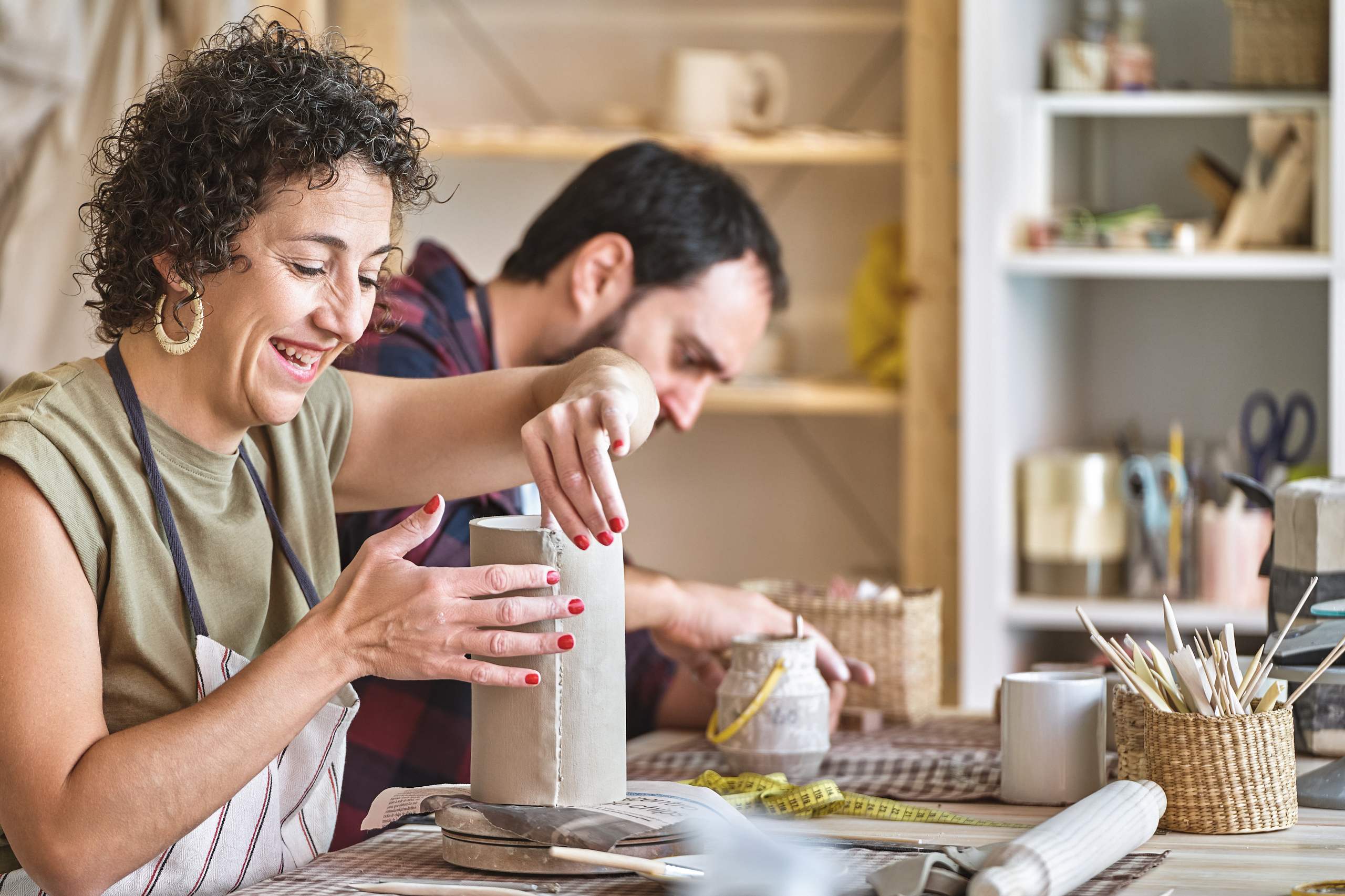
Consistency is one of the most important skills in pottery. It’s what transforms occasional successful pieces into reliable craftsmanship. Although creativity is critical, regular practice and steady habits are what will actually help you improve and build confidence with clay.
Why Consistency Matters in Ceramics
In the field of pottery, control must be exercised at every level, from hand-building and throwing to drying and firing. Without consistency, any form, no matter how simple it may appear, can become a risk.
But, when you are consistent with your technique, you will gain familiarity and develop a sense of how clay will behave in varying circumstances. That means you are better able to recreate successful outcomes and improve upon them. Consistency leads to quality, and confidence.
Establishing a Consistent Practice Routine
One of the best ways to improve as an artist is by practicing consistently even if those are short sessions every day. Doing so will help you develop a familiarity and fluency with your hands and the amount of pressure they are applying to your clay.
A structured routine could include set periods for shaping, trimming, and even applying a glaze. Even repeating a basic technique time and time again can help you see tangible improvement over time.
Consistent practice turns work into habit.
Repeating Simple Forms
Advanced forms are usually derived from repeating simple shapes and forms. By doing things over and over again, like creating a simple bowl, cup, or cylinder, you will gain a greater understanding and appreciation for the structure and proportion of that shape.
You will learn a little something new each time, even if they are the exact same form. Soon enough, you will see a marked improvement to the precision and quality of those forms.
Repetition is a great way to learn while throwing pottery.
Documenting Your Improvement
Keeping a log of your work allows you to track how your skills are advancing from session to session. You could even do this by taking a photo of each piece and writing a few notes about them afterwards.
By reviewing pieces you’ve made in the past, it becomes easy to see where there may have been room for improvement as well as where you are making progress. Doing so gives you a clearer understanding of how to work on specific problems and achieve consistent results.
Tracking your work can help you understand your progress.
Developing Muscle Memory
Pottery requires physicality. Repetition builds muscle memory and teaches your hands the motions needed to shape, pull, and control the clay.
Eventually, with enough time and practice, movements become more intuitive and effortless. That gives you the freedom to focus on other areas like creativity.
Building muscle memory makes it more natural to work clay.
Patience is Important
Consistency does not mean you have to always produce perfect pieces. It’s more about the act of showing up consistently and continuing to develop yourself over time.
Sometimes, your work might go perfectly, and other times you can have a less-than-optimal experience. Being patient and knowing that you are building long-term habits is key.
Consistency in your pottery practice requires patience.
Conclusion
Building consistency into your pottery practice is vital for long-term success. Developing a consistent routine, repeating basic shapes, recording your progress, and building muscle memory will help you improve your skills over time. Consistency with the art of pottery can bring confidence and creativity to the craft.