
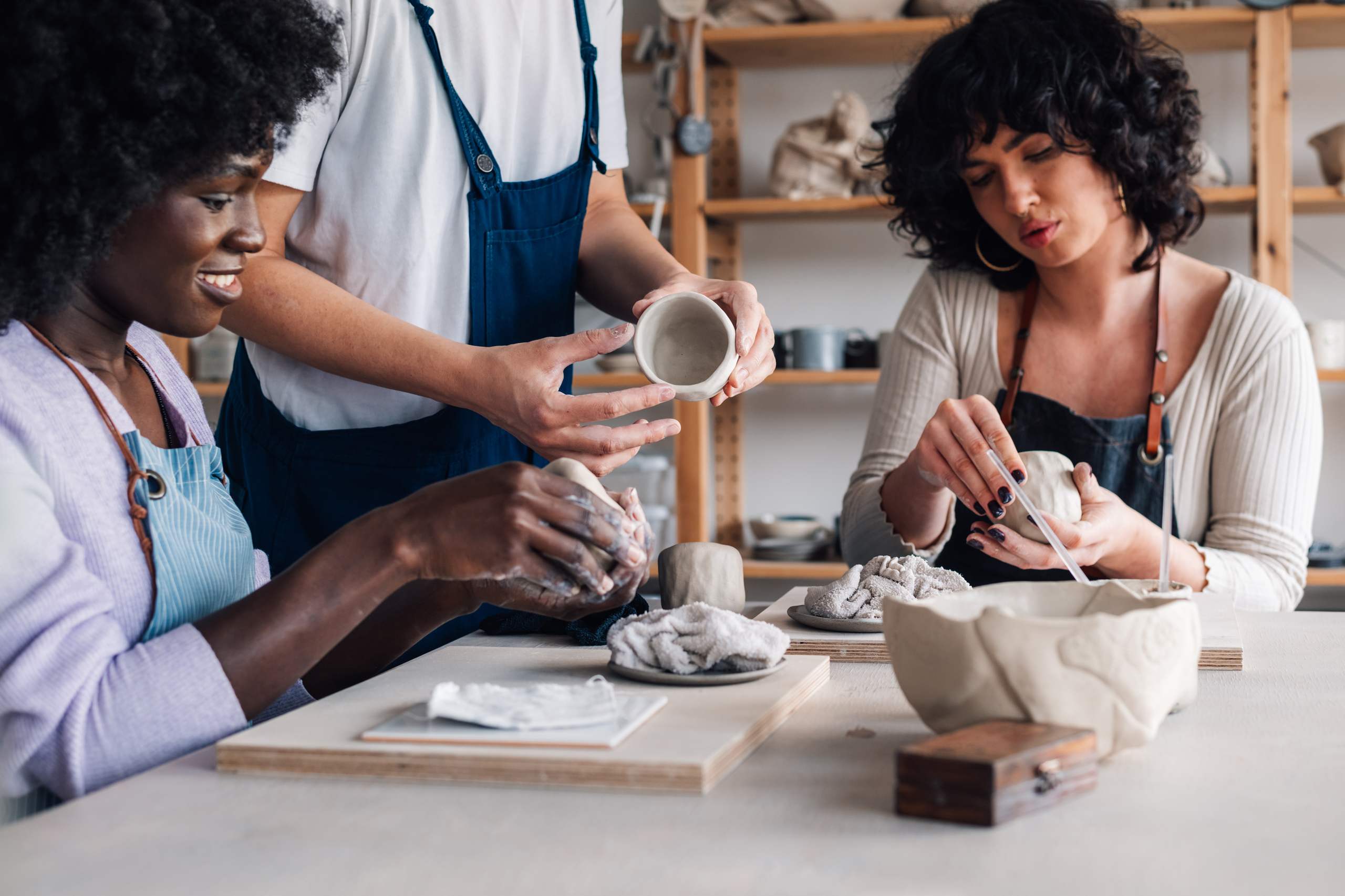
Glaze is one of the most critical aspects of the finishing process. It not only adds color and visual interest to your piece, but it also adds durability and protection to the pottery’s surface. Properly applied glaze creates a more refined, professional piece.
What Is Glaze Used For
Glaze is a glassy mixture applied to pottery before the firing process. When fired in a kiln, it fuses with the surface of the pot to create a durable and aesthetically interesting surface. Besides being visually appealing, the glaze also makes the pottery waterproof, and more durable. It is crucial for pieces that are intended to be functional, like bowls, plates, and cups.
Glaze is an effective way of achieving an artistic effect, as well as being a means of preserving the durability of the finished piece.
Types Of Glaze
Depending on the type of glaze, your piece will have a different look, texture and finish. Some are glossy, and some are matte, some will have a textured finish, and others will be more muted in color. You can also experiment with the type of clay and other glazes, as some glazes react differently with different clays and glazes.
Understanding glaze effects and techniques will help you make better artistic choices.
Applying Glaze
There are multiple ways you can apply glaze, like by dipping the piece, or painting it, pouring it or spraying. Each different way of application will create a different type of finish. Glazing is a crucial part of the process as it determines the overall look of the piece. It is best for a piece to have a more even coverage, so as to prevent the piece from having streaks and a patchy appearance after firing.
Different ways of applying glaze will create different visual results.
Even Coverage
When the glaze is applied, the potter should make sure that the glaze is applied to the entire surface, and the consistency of the glaze is equal throughout, for better visual appeal after the glaze fires.
If the glaze is not applied evenly, or is too thick, the piece is more prone to having streaks and uneven coverage after firing. It is always better for a piece to be applied with multiple thin coats of glaze, rather than one thick coat.
Make sure the glaze is evenly applied to the whole piece.
Firing
Once your pottery has been glazed, it is placed in a kiln and fired. When the glaze is fired, it will be melted and fused to the pot surface.
The firing process plays a vital role in the appearance and finish of the glaze. A potter should make sure that the firing process is executed precisely, to obtain the desired look and aesthetic qualities of the glaze.
Glaze is brought out to its fullest extent during the firing process.
Playing With Glaze
There are many ways you can make creative choices to achieve unique effects on your pottery. You can combine different glazes and colors to make more complex and layered surfaces. You can also apply it unevenly and allow certain areas of the piece to be more exposed for a more textured, interesting finish.
Be creative when experimenting with glazing and firing methods, but make sure to test new ideas beforehand to avoid unwanted visual results. You will be able to create more unique works this way, and you will learn how to execute more specific designs through trial and error.
Make sure you play around with glaze effects to create a distinct style.
In Conclusion
Glazing is a significant and essential part of the pottery making process as it not only allows for artistic exploration, but it also adds a more refined look and durability to the piece. By understanding the type of glazes and ways to apply them, you can create your own professional quality pieces and make glaze a vital part of your design.